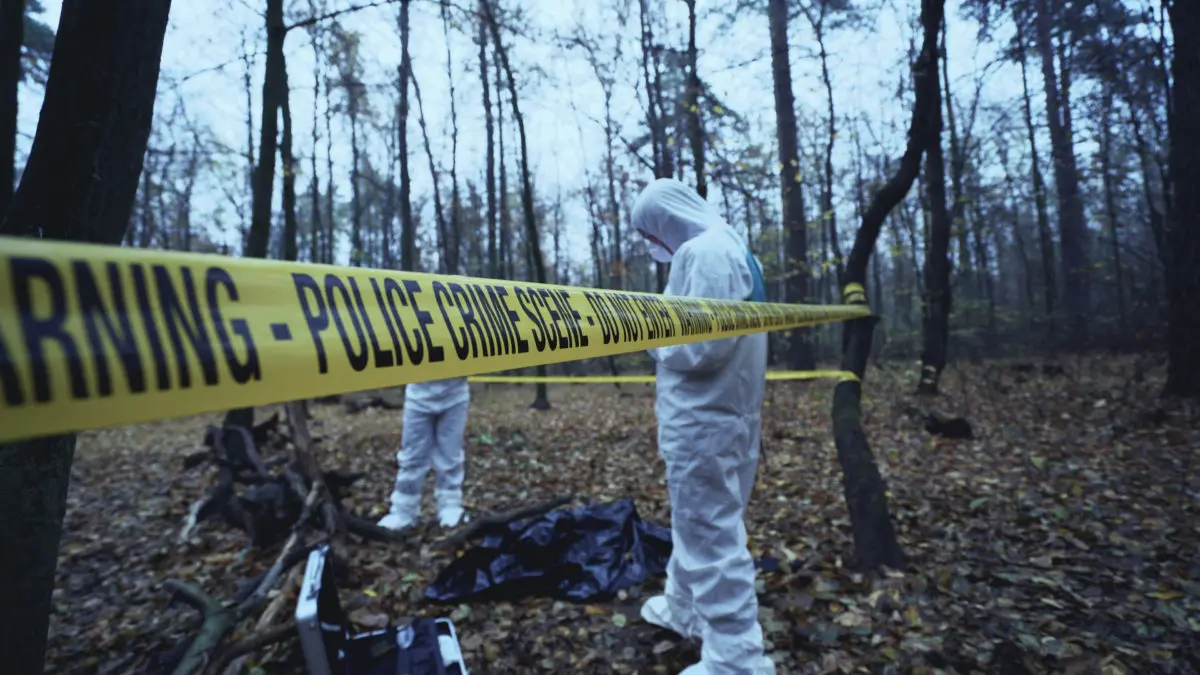
Movement of Deceased Persons by Law Enforcement Officers
Published 04/13/2026
Prepared by CIRSA Risk Control and General Counsel Departments. If you have any questions concerning this CIRSA Risk Advisory, please contact Martin Waln, CIRSA Risk Control Specialist, at martinw@cirsa.org, or Nick Cotton-Baez, CIRSA Associate General Counsel, at nickc@cirsa.org.
It’s not uncommon for law enforcement officers to encounter dead bodies when responding to calls for service. While law enforcement plays an important role in securing death scenes and conducting necessary investigations, Colorado law places primary authority over the body of a deceased person with the county coroner.
Ideally, the movement of deceased bodies would be handled directly by the coroner’s office or with the assistance of the county sheriff’s office. Indeed, municipal police officers are not legally required to assist the coroner with the removal of a deceased body. However, in practice, the coroner may occasionally request municipal police officers to assist with the removal of bodies, particularly in smaller jurisdictions facing staffing or other resource constraints.
This risk advisory outlines the legal framework governing the movement of deceased persons and provides suggested risk management practices for municipal law enforcement agencies.
SUMMARY OF KEY CONSIDERATIONS FOR MUNICIPAL POLICE DEPARTMENTS
- The county coroner has primary legal authority over the body of a deceased person in most death investigations.
- Law enforcement officers arriving at a death scene must notify the coroner and should not move a deceased body before the coroner or coroner’s designee arrives and specifically requests their assistance in moving the body.
- If officers reasonably believe the individual may still be alive, they may move the person to provide lifesaving care, including immediate
transport for medical emergencies. However, once death is confirmed, the body should not be moved without a coroner’s direction. - Law enforcement officers should focus their efforts on securing the scene, preserving evidence, identifying witnesses, and initiating investigative procedures, and should not interfere with the coroner’s legal authority over the deceased body.
- Agencies that assist the coroner’s office with body removal should maintain clear internal policies, training, and safety procedures to protect officer safety and reduce risk when officers assist the coroner with body removal.
- Agencies regularly assisting the coroner’s office with body removal should seek to establish clear operational protocols with the county coroner’s office, which clearly delineate the parties’ respective responsibilities with respect to the death scene, investigations, and body removal.
REPORTING DEATHS
- Under Colorado law, the responding law enforcement agency must notify the county coroner whenever a death is discovered or confirmed as soon as practicable after the scene is safe and secure. The coroner is responsible for notifying the district attorney and then may proceed to the death scene.
- Upon arrival of the coroner at the death scene, law enforcement must make all reasonable accommodations to allow the coroner to collect time-sensitive information such as body and scene temperature, lividity, and rigor.
- Law enforcement must cooperate with the coroner so that the coroner may properly determine the cause and manner of death of any person who has died under the circumstances listed in C.R.S. § 30-10-606(1), such as deaths that are violent, occur as a result of an accident (including at the workplace), suspicious, sudden, unattended by a physician, occur by the act of a peace officer or while in custody, pose a public health risk, or otherwise present circumstances that warrant investigation by the coroner.
CORONER AUTHORITY OVER DECEASED PERSONS
If the deceased person has died as a result of any of the circumstances set forth in C.R.S. § 30-10-606(1), or the cause of death is unknown:
- The coroner takes legal custody of the body. (However, if the event that resulted in the death of the person occurred outside of the responding coroner’s county, the responding coroner must transfer jurisdiction of the death to the coroner of the county in which such event occurred.)
- The coroner, in consultation with the district attorney or local law enforcement agency, is responsible for facilitating the timely removal of the body to preserve and protect evidence. The coroner may order the removal of the body for further investigation or release the body to the next of kin if no further investigation is required by law enforcement.
- The body may not be removed from the place of death before the arrival of the coroner or the coroner’s designee, except upon the express direction of the coroner or coroner’s designee.
ROLE OF LAW ENFORCEMENT IN SECURING DEATH SCENES
- Law enforcement officers often are the first responders to a death scene, but their responsibilities are generally limited to notifying the coroner, securing the scene (including the body), preserving evidence, identifying witnesses, and initiating investigative procedures.
- Once a death is confirmed, police officers should not move a deceased person prior to the arrival of the coroner or coroner’s designee unless the coroner or the coroner’s designee directs officers to assist with moving the body. In such cases, police officers may assist under the coroner’s or the coroner’s designee’s direction.
- Improper movement of remains may create risks such as disturbance or destruction of forensic evidence, interference with the coroner’s statutory duties, and/or occupational safety hazards to responding officers.
RESCUE EFFORTS
- If officers reasonably believe the individual may still be alive, they may move the person to provide lifesaving care, including CPR, emergency medical intervention, and immediate transport for medical emergencies.
- Once death is confirmed, however, the body should not be moved without the coroner’s direction.
POTENTIAL RISKS TO OFFICER SAFETY
- Handling deceased persons can expose officers to bloodborne pathogens (e.g., HIV, hepatitis) and other health hazards.
- Departments should also recognize the physical injury risks associated with lifting or moving bodies, including musculoskeletal injuries and slips or falls.
- Exposure to death, particularly in traumatic or disturbing circumstances, may pose mental health risks, including acute stress reactions,
cumulative trauma, or symptoms associated with post-traumatic stress.
SUGGESTED RISK MANAGEMENT PRACTICES
To protect personnel from health, safety and liability risks, law enforcement agencies should consider the following practices.
PROVIDE APPROPRIATE PPE AND TRAINING
If officers may assist with moving remains at the coroner’s request, departments should ensure (1) biohazard handling and exposure procedures are in place and understood, (2) appropriate PPE kits are available and used, and (3) officers receive training in deceased body handling, including bloodborne pathogen training and training in safe lifting techniques.
PROVIDE APPROPRIATE MENTAL HEALTH SUPPORT
To address mental health risks associated with exposure to death, agencies should consider providing access to appropriate support resources, such as supervisor check-ins, peer support, employee assistance programs, or access to clinicians or counseling services. CIRSA partners with a psychological services professional to provide up to two complimentary counseling sessions per year for each officer of a member law enforcement agency to help mitigate and stabilize mental health impacts arising from critical police incidents. Click HERE for more information about this program.
ESTABLISH CLEAR INTERNAL POLICIES
Departments should adopt clear, written policies that define officer responsibilities, protect personnel, and ensure compliance with statutory requirements and best practices. At a minimum, policies should address:
- Notification of the coroner whenever a death is discovered or confirmed as soon as practicable after the scene is safe and secure.
- Procedures for securing and preserving the death scene.
- Protocols for the protection of officer safety.
- Requirements for the availability of and use of appropriate personal protective equipment (PPE).
- Protocols for addressing exposures to bloodborne pathogens and other health hazards, including exposure control plans and postexposure/ injury reporting and medical evaluation procedures.
- Requirements for officer training in deceased body handling, including bloodborne pathogen training and training in safe lifting
techniques.
ESTABLISH PROTOCOLS WITH THE COUNTY CORONER
Departments should establish clear, proactive coordination protocols with the county coroner to ensure consistent practices, reduce confusion at scenes, and minimize liability. Such protocols may include:
- Establishing mutual understandings regarding when, if ever, law enforcement may assist with moving remains at the coroner’s
direction. - Consider addressing the circumstances, if any, under which a body may be moved when necessary to address an immediate threat to life, health, or safety (e.g., fire, structural instability, roadway hazards) or as required to preserve evidence of a crime (e.g., to prevent the body’s destruction). Consider limiting movement to what is strictly necessary, and requiring thorough documentation, including the reason for the movement and the condition/location of the body before and after the movement.
- Addressing how movements of the body are documented, how evidence (including personal effects or notes) is handled, and how responsibilities are divided to maintain the chain of custody and investigative integrity.
- Defining how and when law enforcement communicates with the coroner during death investigations, including notification timing and methods, real-time coordination at the scene, and escalation procedures if circumstances become suspicious or potentially criminal.
- Address collaboration in identifying the deceased and locating and notifying next of kin, ensuring a consistent and measured approach.
This Risk Advisory is provided for general informational purposes only, and not as legal advice. Agencies should consult with their own legal, law enforcement, and other professionals in developing policies and practices related to the subject matter and in responding to specific situations.
RESOURCES
- C.R.S. § 30-10-606: https://codes.findlaw.com/co/title-30-government-county/co-rev-st-sect-30-10-606/ (Users should ensure they review and follow the current version of the statute.)
- C.F.R. § 1910.1030 – Bloodborne pathogens: https://www.osha.gov/laws-regs/regulations/standardnumber/1910/1910.1030
